
How Long Does Bahrain Incorporation Take?
08.07.2026
Bahrain Business Banking for Global Founders
12.07.2026
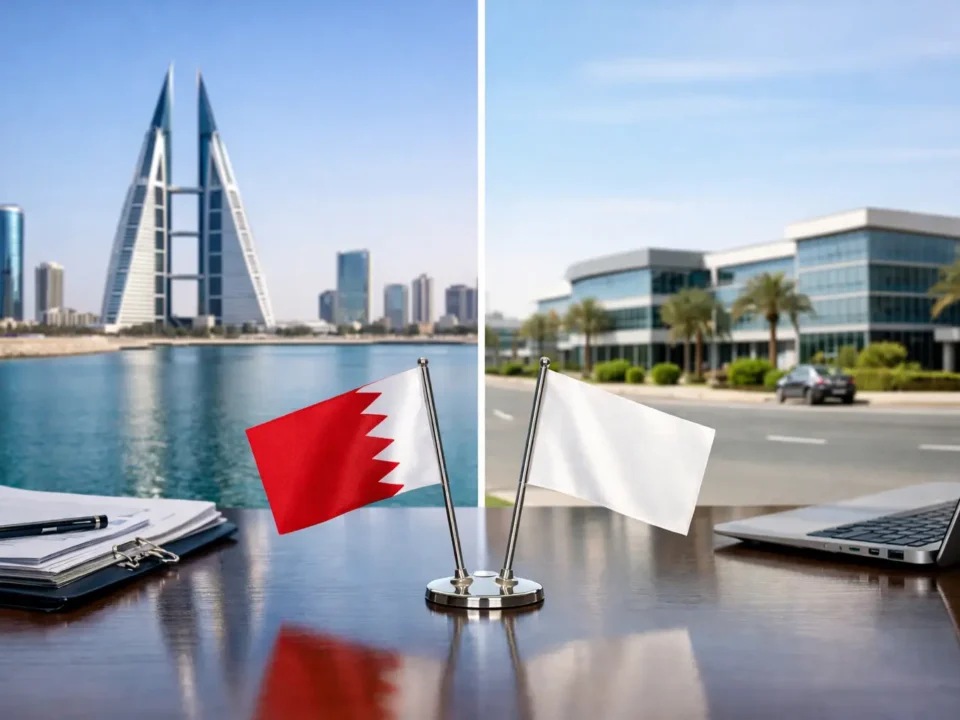
If you are comparing bahrain vs dubai company setup, you are probably not looking for a brochure answer. You are looking for the jurisdiction that will let you open faster, bank more effectively, operate with less friction, and support international growth without unnecessary drag. That is the real decision.
For many foreign founders, Dubai is the default name that comes up first. Bahrain is the market serious operators often examine next – and, in many cases, the one that fits better once cost, structure, and banking practicality are put on the table. The right choice depends on what kind of business you are building, how you want to manage it, and what you need from your Gulf presence.
Bahrain vs Dubai company setup: what actually matters
A comparison between Bahrain and Dubai should go beyond reputation. The better question is simple: what are you trying to achieve in the Gulf?
If your priority is brand visibility, a large on-the-ground ecosystem, and access to a highly recognized regional commercial center, Dubai has obvious appeal. It is established, globally familiar, and strong for founders who want a visible UAE base with broad market recognition.
If your priority is a more cost-efficient setup, straightforward market entry, practical operating economics, and a business environment that can support international banking coordination and cross-border structuring, Bahrain deserves close attention. It often gives foreign entrepreneurs more room to build with precision rather than simply pay for prestige.
That distinction matters. A company setup is not just a registration exercise. It affects your recurring overhead, your banking path, your compliance burden, and how easily your structure supports your wider business model.
Cost is usually the first real separator
Dubai can be efficient in the right zone and for the right activity, but it is rarely the low-friction option people assume. License fees, office requirements, immigration costs, annual renewals, and add-on administrative charges can add up quickly. For founders entering the region for the first time, the headline setup quote is often only part of the picture.
Bahrain is often more attractive on pure operating cost. Setup and maintenance can be leaner, especially for international entrepreneurs who do not need a large physical footprint on day one. That can make a significant difference if your goal is to establish a credible Gulf company while preserving capital for sales, hiring, product development, or payment operations.
This is one of the most practical aspects of the bahrain vs dubai company setup decision. A lower-cost structure is not just about saving money. It gives you flexibility. It can reduce pressure during the early stages of expansion and make the jurisdiction easier to keep active as part of a wider international group.
Banking and financial functionality are where strategy matters
Many founders choose a jurisdiction based on marketing reputation and only later realize that registration is the easy part. Banking readiness, KYC quality, business model presentation, and jurisdiction fit often matter more than the incorporation certificate itself.
Dubai has a strong financial ecosystem, but banking can still be selective, especially for foreign-owned entities, cross-border trading models, digital businesses, or structures that are not clearly documented from the start. A founder can form a company quickly and still face delays if the banking profile is weak.
Bahrain has long held a respected position in regional finance, and that matters for founders who need a serious operating base rather than a symbolic one. When the company structure, activity, shareholder profile, and supporting documents are prepared properly, Bahrain can be a highly credible jurisdiction for entrepreneurs who need practical access to business banking and international financial functionality.
This is where advisory quality makes a difference. Strong setup coordination includes more than filing documents. It means preparing the company in a way that aligns with real-world banking expectations from the outset.
Ownership, substance, and business model fit
Foreign ownership options have improved across the Gulf, but the right setup still depends on what you are doing. Not every activity carries the same requirements, and not every founder needs the same level of local presence.
Dubai offers a wide range of structures through mainland and free zone options. That variety can be helpful, but it can also create complexity. The wrong zone, wrong license category, or wrong activity selection can limit how the company banks, contracts, or scales.
Bahrain is often compelling for founders who want a clean structure with fewer layers and a more straightforward operational profile. For service businesses, holdings, trading structures, consultancies, and internationally oriented companies, Bahrain can provide a strong balance between credibility and simplicity.
The right question is not which jurisdiction has more options. It is which one gives you the most suitable option without creating avoidable administrative weight.
Speed is not just about incorporation day
Many jurisdictions can advertise fast company formation. That is useful, but it is not the same as being operational.
A company is truly set up when the structure is approved, the documentation is complete, the renewals are understood, the banking path is considered, and the founder knows what comes next. Speed without coordination often leads to revisions, delays, and preventable compliance issues.
Dubai can be fast, especially in standard cases. Bahrain can also move efficiently when the setup is handled with precision. The real difference is whether the process is being managed as a strategic launch or as a basic filing exercise.
International founders usually need more than registration. They need the jurisdiction, activity, paperwork, and banking preparation to work together. That is why a coordinated Bahrain setup can outperform a rushed Dubai setup, even if the brochure timeline looks similar.
Tax and long-term efficiency
Founders evaluating Gulf expansion almost always ask about tax. Fair enough. But tax should be viewed alongside compliance, banking, and economic substance, not in isolation.
Dubai remains attractive for many international businesses, but the total picture can be more layered depending on entity type, operations, and future reporting obligations. Bahrain is often attractive because it combines regional credibility with efficient business economics and a practical framework for internationally minded owners.
For many founders, the better long-term result comes from choosing the jurisdiction that fits the actual operating model rather than the one with the strongest headline appeal. Prestige can help with perception. Efficiency helps with execution.
Who should choose Bahrain over Dubai?
Bahrain is often the stronger choice for founders who want a Gulf base that is cost-conscious, credible, and easier to manage as part of a wider international structure. It is especially relevant if you value direct advisory support, careful banking preparation, and a setup process that is handled with discretion.
It can also be the better fit if you do not need a large public-facing footprint in the UAE and instead want a stable platform for consulting, trade, holdings, international services, or cross-border business operations. In those cases, Bahrain often gives you more strategic efficiency with less noise.
Firms like Prime Gulf Advisors are built around that exact need – helping foreign founders structure and coordinate a Bahrain entry that supports real business activity, not just incorporation paperwork.
Who may still prefer Dubai?
Dubai may be the right choice if your business depends on a UAE commercial presence, local market access tied specifically to Dubai, or a brand association that matters in your sector. It can also make sense for founders who expect to hire locally at scale, entertain clients regularly in the city, or operate in industries where Dubai’s ecosystem creates direct commercial advantages.
That said, even in those cases, the decision should be made carefully. A premium address is useful only if it supports the economics and operational needs of the business.
The smarter way to make the decision
The best way to approach bahrain vs dubai company setup is to stop asking which jurisdiction is more famous and start asking which one is more useful to your business over the next two to three years.
Look at total setup cost, annual maintenance, banking practicality, ownership suitability, documentation burden, and whether the jurisdiction supports your specific expansion strategy. A founder with an international consulting firm, holding structure, or cross-border trading model may reach a very different answer than a founder opening a consumer-facing operation in the UAE.
That is why the strongest decisions are not made from generic comparison charts. They are made by aligning the jurisdiction with your real commercial plan, your risk profile, and your operational priorities.
Bahrain is not trying to imitate Dubai. That is precisely why it can be such a strong choice. For the right founder, it offers something more valuable than noise – clarity, efficiency, and a serious foundation for global business growth.
If you are building with intention, that usually matters more than profile.